


[Bima Abi Wahyu Aji S.]
The Metal Behind the Movie
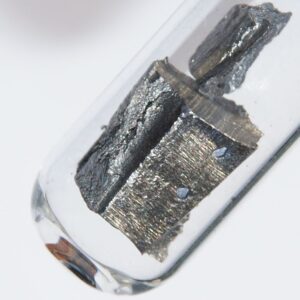
Many of us probably first heard the name palladium not in a chemistry class, but on a movie screen. In Iron Man 2, Tony Stark suffers from heavy metal poisoning caused by the arc reactor keeping him alive, an arc reactor made of palladium that slowly poisons his own blood. Fictional as the story is, the filmmakers didn’t pick the element at random. Palladium is a real chemical element with the symbol Pd and atomic number 46, one of six members of the platinum group metals (PGM) on the periodic table.
English chemist William Hyde Wollaston first isolated palladium in 1802, extracting it from residue in crude platinum ore from South America. His discovery sparked controversy. Wollaston chose to announce it anonymously through handbills he distributed in London in 1803. He finally acknowledged the discovery officially before the Royal Society in 1805 (Khapra & Ravish, 2022). The name “palladium” itself comes from the asteroid Pallas, which astronomers had just discovered around the same time (BullionVault, 2026).
Why Palladium Matters Beyond the Screen
Unlike in the film, palladium in the real world is becoming increasingly sought after as the world moves toward the clean energy transition. Its ability to absorb large amounts of hydrogen at room temperature makes it a key candidate for hydrogen storage technology and fuel cells. Experts widely tout these two technologies as the backbone of future energy (Dekura et al., 2019).
Palladium goes through a fairly long processing chain before it reaches the ready-to-use stage. Producers typically obtain it as a byproduct of nickel and copper mining, then separate it through smelting and refining until they achieve high-purity palladium metal. But long before we get into those technical details, a more relevant question comes first: what exactly do we use this metal for? This article explores the real-world applications of palladium, from industry and energy to electronics, along with the challenges that come with it.
From Car Exhausts to Fuel Cells: The Many Uses of Palladium
Automotive Industry: The Exhaust Tamer
The largest use of palladium today comes from something we pass by every day on the road: the catalytic converter in gasoline-powered vehicles. This component converts harmful exhaust gases like carbon monoxide (CO) and unburned hydrocarbons (HC) into far safer compounds. An oxidation reaction on the surface of a precious metal catalyst turns these gases into carbon dioxide (CO₂) and water vapor.
In a three-way catalytic converter system, palladium usually works alongside platinum and rhodium. Palladium and platinum drive the oxidation reaction, while rhodium more effectively reduces nitrogen oxides (NOx) into harmless nitrogen gas. This use is so dominant that the automotive sector consumes more than 80% of the world’s palladium supply (Pistili, 2025).
Energy: A Small Key to a Big Hydrogen Ambition
Beyond conventional automotive use, palladium also plays an important role in a much bigger issue: the energy transition. One of the metal’s most unique properties is its ability to absorb large amounts of hydrogen gas at room temperature and pressure. This process forms palladium hydride (PdHₓ) through a simple reaction:
Pd + x/2 H₂ → PdHₓ
This property makes palladium a strong candidate for hydrogen storage technology and hydrogen gas purification. Engineers also use it as a catalyst in fuel cells that convert hydrogen’s chemical energy into electricity (Dekura et al., 2019). Its sensitivity to hydrogen gas makes it useful in hydrogen leak detection sensors across the industrial and aerospace sectors, something crucial given how highly flammable hydrogen is (Goodfellow, 2025). Palladium’s role in this technology chain will likely grow more significant as the world pushes toward hydrogen-based energy as an alternative to fossil fuels.
Electronics: Small Component, Big Role
While the previous two sectors might feel distant from everyday life, the electronics sector brings palladium much closer to home. Manufacturers widely use this metal as the internal electrode in a component called a Multilayer Ceramic Capacitor (MLCC), a tiny part embedded in nearly every electronic device, from smartphones to laptops.
Manufacturers choose palladium because it can undergo co-firing with dielectric ceramic material at high temperatures without easily oxidizing. This process results in a dense and reliable MLCC structure (Karty, 2026). Beyond MLCCs, they also use palladium as a plating layer on connectors and electronic contacts, thanks to its corrosion resistance and good electrical conductivity.
Three Sides of the Same Coin: Technology, Economy, and Environment
On the technology side, palladium’s strength lies in a combination of properties few other metals can match: high catalytic activity, corrosion resistance, and a unique hydrogen absorption capacity. This combination makes it hard to fully replace. Researchers still search for substitution alternatives, for example, partially replacing palladium with platinum in catalytic converters, or using nickel in low-capacity MLCC electrodes when palladium prices spike.
On the economic side, palladium prices are highly volatile and sensitive to geopolitical issues. Russia and South Africa supply around 75–80% of the world’s palladium (Phoenix Refining, 2025). As a result, any production disruption or geopolitical tension in either region can immediately trigger price swings in the global market. For example, palladium prices broke an all-time high of over $3,400 per ounce in March 2022. Supply fears following Russia’s invasion of Ukraine drove this spike. Prices then crashed sharply and remained highly volatile throughout 2024–2025 amid shifting EV adoption trends and ongoing concerns over Russian supply (Pistili, 2025).
On the environmental side, the main challenge emerges long before palladium reaches consumers, at the mining and processing stage. Palladium ore grades are extremely low, so mining companies need enormous volumes of rock to produce just a small amount of the metal. This process contributes to land degradation, high energy consumption, and large volumes of tailings waste (Sustainability Directory, 2025). A life cycle assessment study on the PGM industry even found that energy consumption during mining and ore-processing accounts for most of this metal’s environmental impact across its entire life cycle (Bossi & Gediga, 2017).
Challenges Behind Palladium’s Shine
Beyond the three aspects above, palladium’s industrial application also faces several distinct challenges, including:
- Supply concentration heavily centered in Russia and South Africa, which leaves the global palladium supply chain vulnerable to geopolitical disruptions and mining operational issues (Phoenix Refining, 2025).
- Pressure from the EV transition, which could suppress long-term palladium demand from the automotive sector, given that pure electric vehicles don’t need catalytic converters.
- Environmental sustainability demands, which push the PGM industry to reduce energy, water, and emissions consumption throughout mining and ore-processing (Bossi & Gediga, 2017).
- The need for more efficient palladium recycling research: recycling from used catalytic converters already supplies a large share of the global secondary market, though there’s still significant room for improvement.
These challenges show that the future of palladium use doesn’t just depend on how much reserve remains. It also depends on how the industry manages supply, substitution technology innovation, and environmental responsibility all at once.
Conclusion
Many people first learned about palladium through Tony Stark’s fictional story on the big screen, but its role in the real world is far broader and more concrete. As part of the platinum group metals, palladium plays a major role in curbing vehicle emissions through catalytic converters. It also paves the way for hydrogen and fuel cell technology in the energy transition, and serves as a crucial component behind the electronic devices we use every day.
Palladium’s use comes with real challenges too, from supply concentration vulnerable to geopolitical shocks, to extreme price volatility, to the environmental impact of mining and processing. As demand continues to grow alongside clean energy technology development, the industry must manage this “rare” metal responsibly, whether through more efficient use, substitution innovation, or recycling, to keep it sustainable for the future.
Learn more about other PGM members like Rhodium, Iridium, and PGM in general in our other GMC articles
References
Goodfellow, C. (2025). Unlocking hydrogen’s potential: Why palladium is the key to a clean energy future.
BullionVault. (2026). Palladium: Properties, uses and investment. https://www.bullionvault.com/platinum-guide/palladium
Dekura, S., Kobayashi, H., Kusada, K., & Kitagawa, H. (2019). Hydrogen in palladium and storage properties of related nanomaterials: Size, shape, alloying, and metal-organic framework coating effects. ChemPhysChem, 20(10), 1158–1176.
Khapra, Ravish. (2022). Palladium (Pd). EBSCO. https://www.ebsco.com/research-starters/geology/palladium-pd
Pistili, M. (2025). Palladium price forecast: Top trends for palladium in 2026. https://investingnews.com/palladium-forecast/
Bossi, T. & Gediga, J. (2017). The environmental profile of platinum group metals. Johnson Matthey Technology Review, 61(2).
Karty. (2026). Ceramic Capacitors: The Complete Guide to MLCC Technology and Applications.
Phoenix Refining. (2025). Russia’s role in the palladium market. https://www.phoenixrefining.com/blog/russia-s-role-in-the-palladium-market
Sustainability Directory. (2025). What is the environmental problem associated with the mining of platinum, palladium, and rhodium?